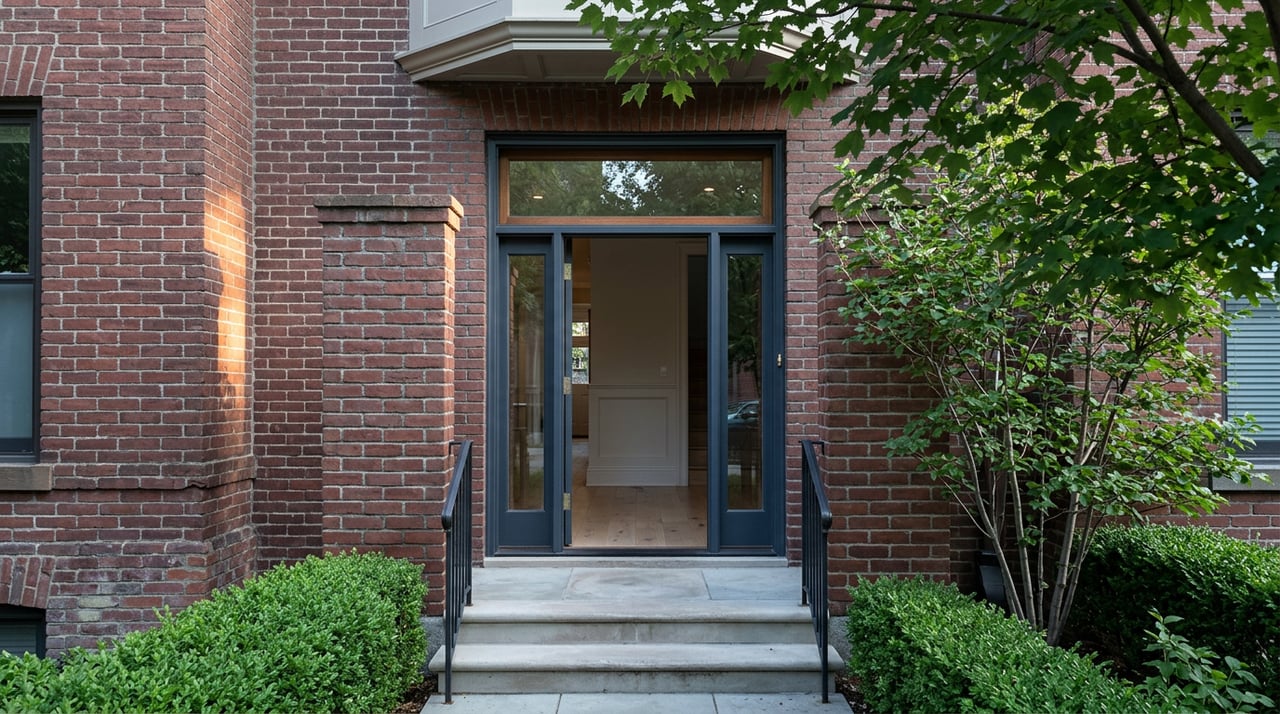
Walk down Harvard Street on a Saturday morning and you'll understand why Coolidge Corner gets called Brookline's busiest sub-market. There's a line for Trader Joe's, another for Rami's falafel, and the marquee at Coolidge Corner Theatre is already up for the evening show. A mile west on Beacon Street, Washington Square is quieter. Fewer storefronts, fewer people stacked three deep on the sidewalk, a slower Saturday.
So it surprises most buyers to learn that as of August 2026, condos in Washington Square are trading at roughly $921 per square foot, while Coolidge Corner condos have sold year to date through late August 2026 at a median of about $850.69 per square foot. The neighborhood with less retail buzz and lower transaction volume is commanding the higher price per square foot. That gap is the actual story here, and it's worth understanding before you decide which of these two Brookline hubs is the better fit for your budget.
The Numbers, Side by Side
These two data sets come from different windows, which is itself part of the lesson. Washington Square's figures are an August 2026 snapshot. Coolidge Corner's are a year-to-date sample running from January 1 through August 27, 2026, covering 80 closed condo sales.
| Washington Square (August 2026) | Coolidge Corner (YTD through Aug 27, 2026) | |
|---|---|---|
| Median condo sale price | ~$1.23M | $1,245,000 |
| Median price per square foot | ~$921 | ~$850.69 |
| Condos sold in the window | Smaller sample, driven by limited inventory | 80 |
Look at the median sale prices and the two neighborhoods look almost identical. Look at price per square foot and Washington Square pulls ahead by roughly 8 to 9 percent. In a market this size, that's not noise. It's a real premium, and it holds even though Coolidge Corner sells in far higher volume.
Here's the part that should change how you read any Coolidge Corner listing this year. In the same period during 2025, 86 Coolidge Corner condos sold at a median price of $899,500, with a median price per square foot of $849.75 and a median unit size of 1,152 square feet. By 2026, the median sale price had jumped to $1,245,000, but price per square foot barely moved, landing at $850.69. What actually changed was the size of what sold. The median condo that closed in 2026 measured 1,395.5 square feet, up more than 240 square feet from the year before. Coolidge Corner's headline price didn't rise because units got more valuable. It rose because bigger units sold.
That's the pattern to watch when someone tells you a neighborhood's prices are "up" without saying by how much and compared to what.
Why the Quieter Block Costs More
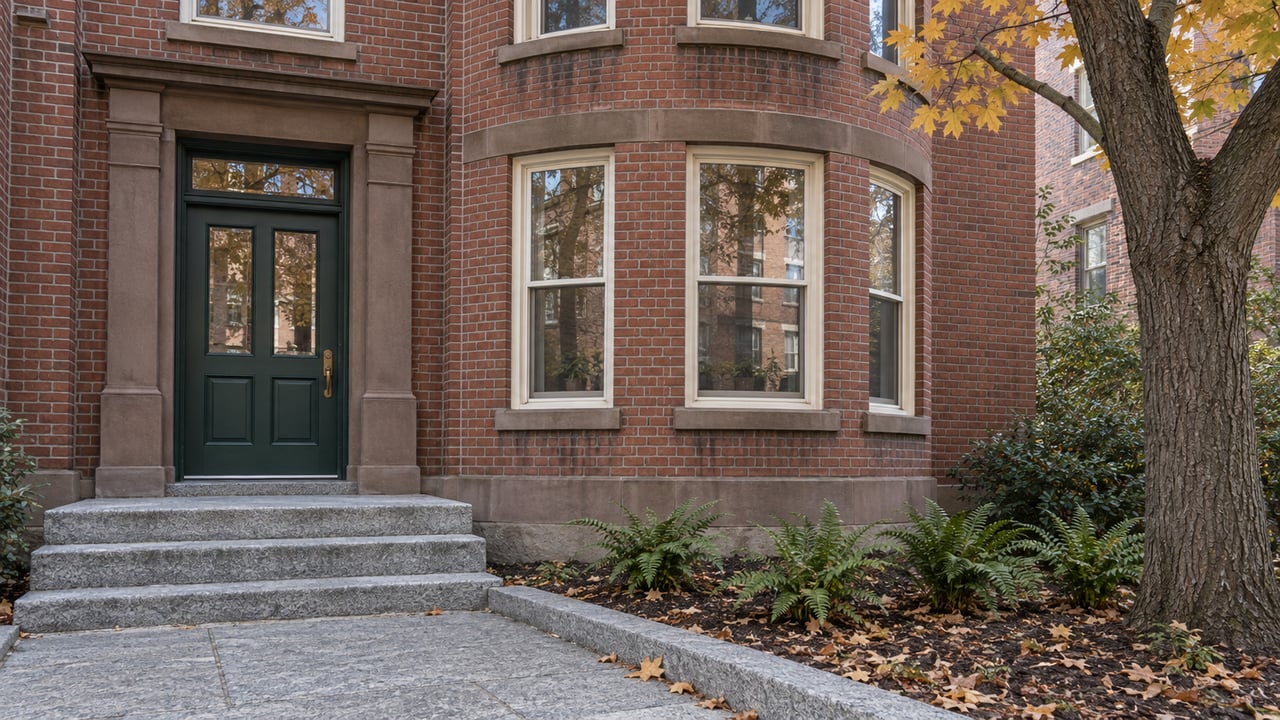
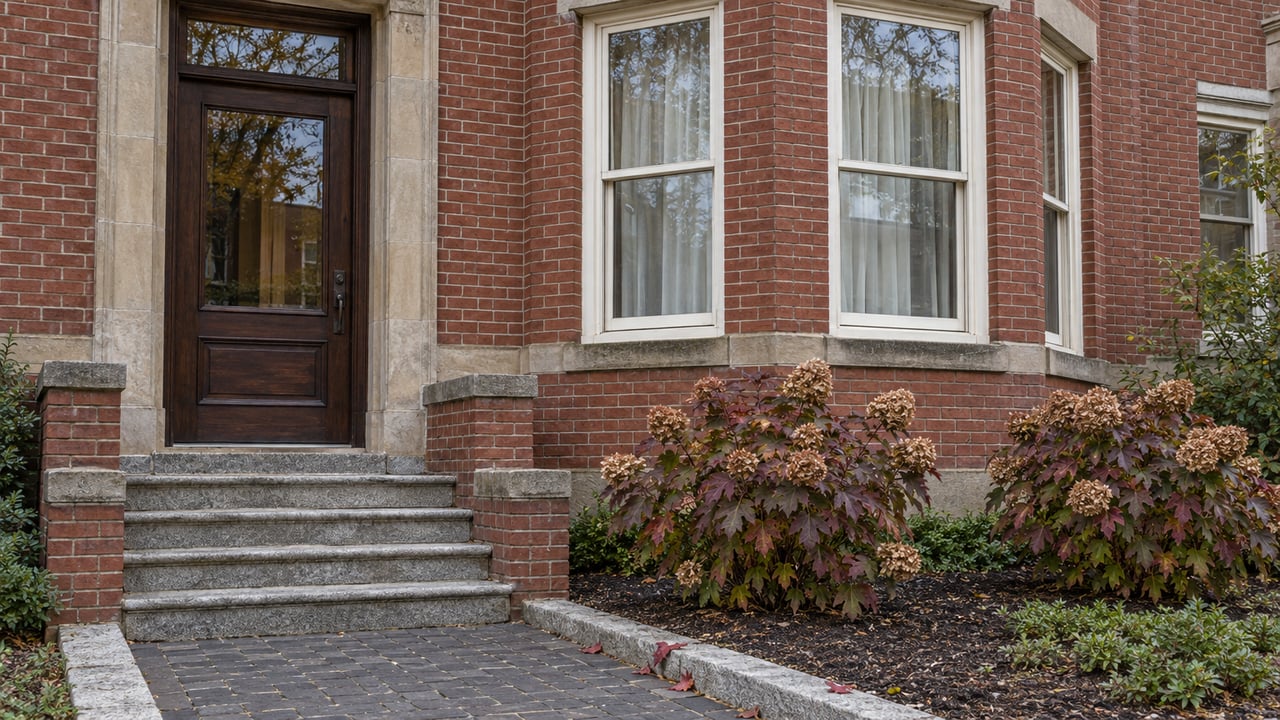
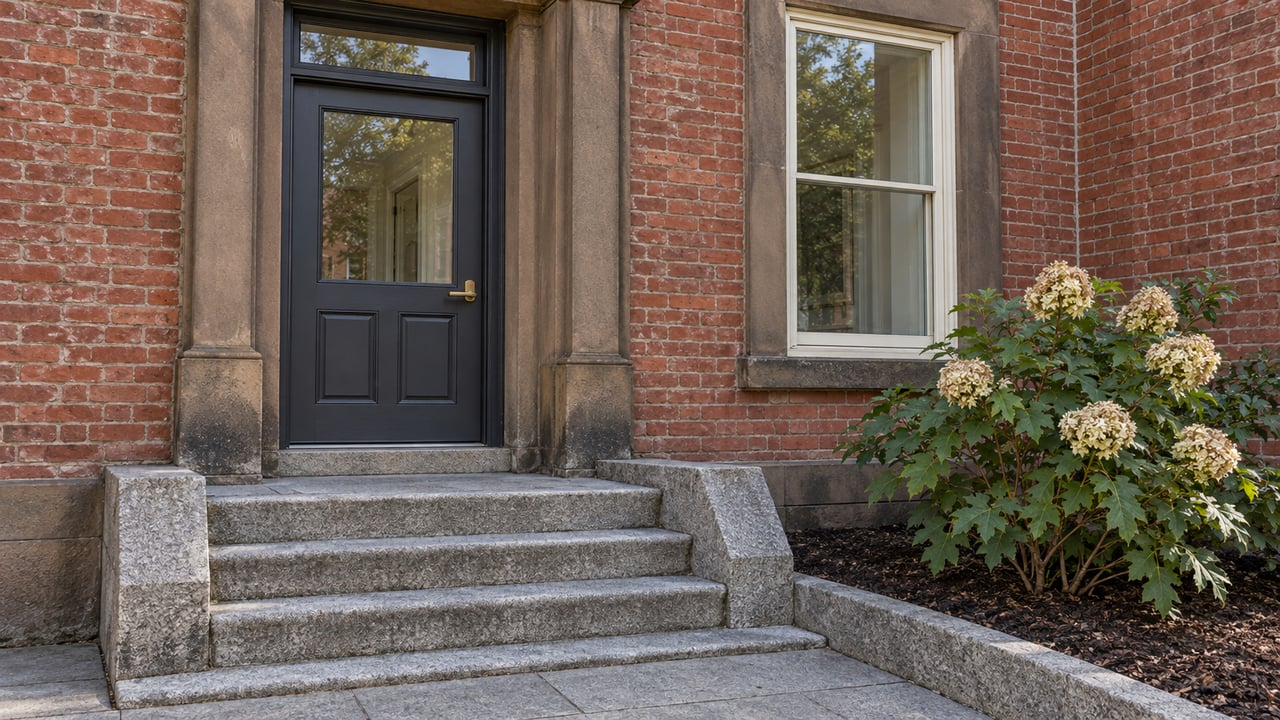
Washington Square's price-per-square-foot premium traces back to what's actually for sale there. The neighborhood's housing stock is anchored by pre-war brick apartment buildings and brownstones along Beacon Street that have been converted into condos, plus a rising number of small-batch new construction projects. Moving up the slopes of Aspinwall Hill and Fisher Hill, the inventory shifts to larger Victorian and Queen Anne single-family homes, many later converted into multi-family properties, alongside classic triple-deckers and mid-century elevator buildings.
Recent listings show what that looks like on the ground. Claflin Flats went through a full gut renovation to create high-end residences with locally sourced cabinetry and premium appliances. The Avond, a small development by Urbaness, added three new luxury condominiums to the neighborhood. A new elevator building at 45 Bartlett Crescent brought garage parking and nine-foot ceilings to the market, and a brand-new duplex condo went up at 1618 Beacon Street. These are lower-volume, higher-finish products, and they pull the per-square-foot number upward because there's less standardized inventory to compete against them.
Coolidge Corner's volume tells a different story. Its market is dominated by pre-war brick apartment buildings and courtyard condominiums, with two-bedroom units functioning as the neighborhood's recognized sweet spot for both resale and rental performance. That's a deep, liquid, repeatable product type. More of it sells, which means more comparable sales exist, which keeps the price-per-square-foot number closer to the middle of the range rather than getting pulled by a handful of unusual properties.
The Two-Bedroom Sweet Spot vs. the One-of-a-Kind Renovation
This difference matters most once you start pricing an actual offer. A Coolidge Corner two-bedroom courtyard condo has dozens of recent, similar sales to anchor a number. A Washington Square brownstone conversion or a boutique new-construction unit often doesn't.
One recent Washington Square listing offered a 5-bedroom, 2-bath condo in a professionally managed 8-unit building, already leased at $5,275 a month with major capital work completed, including a new roof and a boiler replacement. That's a genuinely different kind of asset than a standard 2-bedroom unit in a 40-unit courtyard building, and it should be priced against different comps.
When a neighborhood's inventory runs this varied, the median and the average both get less reliable as a shorthand. That's true in both directions. It's why a Washington Square number can look inflated relative to its foot traffic, and why a Coolidge Corner number can look flat even in a year when unit sizes clearly moved.
What a Thinner Comp Set Means for Your Offer
If you're the buyer or seller, the practical consequence is this: Washington Square deals require more comp-building work, not less. With fewer transactions to draw from and a wider spread of building types, from 1960s elevator conversions like the one at 1600 Beacon Street to brand-new boutique construction, an appraiser or a lender's automated valuation model has less to lean on. That can slow financing, invite more scrutiny on a low appraisal, and make a strong, well-documented comp package more valuable to your negotiating position than it would be in a neighborhood where the last five sales look almost identical to yours.
Coolidge Corner's advantage is the opposite. Because so many units share a similar profile, size, era of construction, and price band, comps come together faster and hold up better under review. That liquidity is worth something even if it doesn't show up in the price-per-square-foot column.
Brookline's townwide condo market gives a useful backdrop here. Across August 2026, 37 of the town's 45 closed sales were condos, and 71.1% of all closings that month settled below the original asking price, the highest share since December 2025. That's a market where buyers are negotiating harder overall, which makes a well-supported comp set even more useful no matter which side of Beacon Street you're on.
The Difference You'd Actually Notice on a Saturday
None of this is to say the two neighborhoods feel the same, because they don't. Coolidge Corner's Green Line stops, St. Paul Street, Coolidge Corner, Summit Avenue, Brandon Hall, and Fairbanks Street, sit within a dense retail corridor built around the Art Deco Coolidge Corner Theatre, the independent Brookline Booksmith, and a Trader Joe's that draws shoppers from well beyond the immediate blocks.
Washington Square runs quieter but not empty. The neighborhood's own Green Line C branch stop recorded 1,091 daily boardings in a 2011 MBTA count, at the time making it the fourth-busiest surface stop on the line, a sign that the foot traffic difference is one of degree, not absence. The Square is still anchored by a cluster of restaurants with outdoor seating, including Golden Temple, The Abbey, The Fireplace, and Washington Square Tavern, plus Athan's Bakery for something sweeter, all gathered around the neighborhood's namesake 18-foot Victorian clock. The Michael Driscoll School, which offers a Mandarin language program, sits right in the neighborhood as well.
Both places work. They just work for different budgets attached to different kinds of properties, and the price-per-square-foot gap is the number that tells you which is which.
A Few Questions Worth Asking Before You Choose
Does a higher price per square foot mean Washington Square is the "better" market? Not necessarily. It reflects what's currently for sale there, which skews toward larger conversions and boutique new construction. A smaller, more standard condo in Washington Square wouldn't automatically command that same premium.
Why did Coolidge Corner's median price rise so much if per-square-foot values barely moved? Because the mix of what sold changed. The median condo that closed in 2026 was roughly 240 square feet larger than the one that closed in the same period in 2025, and bigger units bring bigger sale prices even when the underlying value per square foot holds steady.
If I'm buying in Washington Square, what should I ask my agent for? A comp set built specifically around your unit's size, era, and building type, not just its zip code. With fewer transactions to draw from, that extra step matters more here than it does in a higher-volume market like Coolidge Corner.
If you're weighing these two Brookline hubs against each other, or trying to figure out what a specific property is actually worth in a market this granular, Eileen Strong O'Boy can walk you through the comps that matter for your situation. Request a home valuation and get a number built for your building, not just your block.