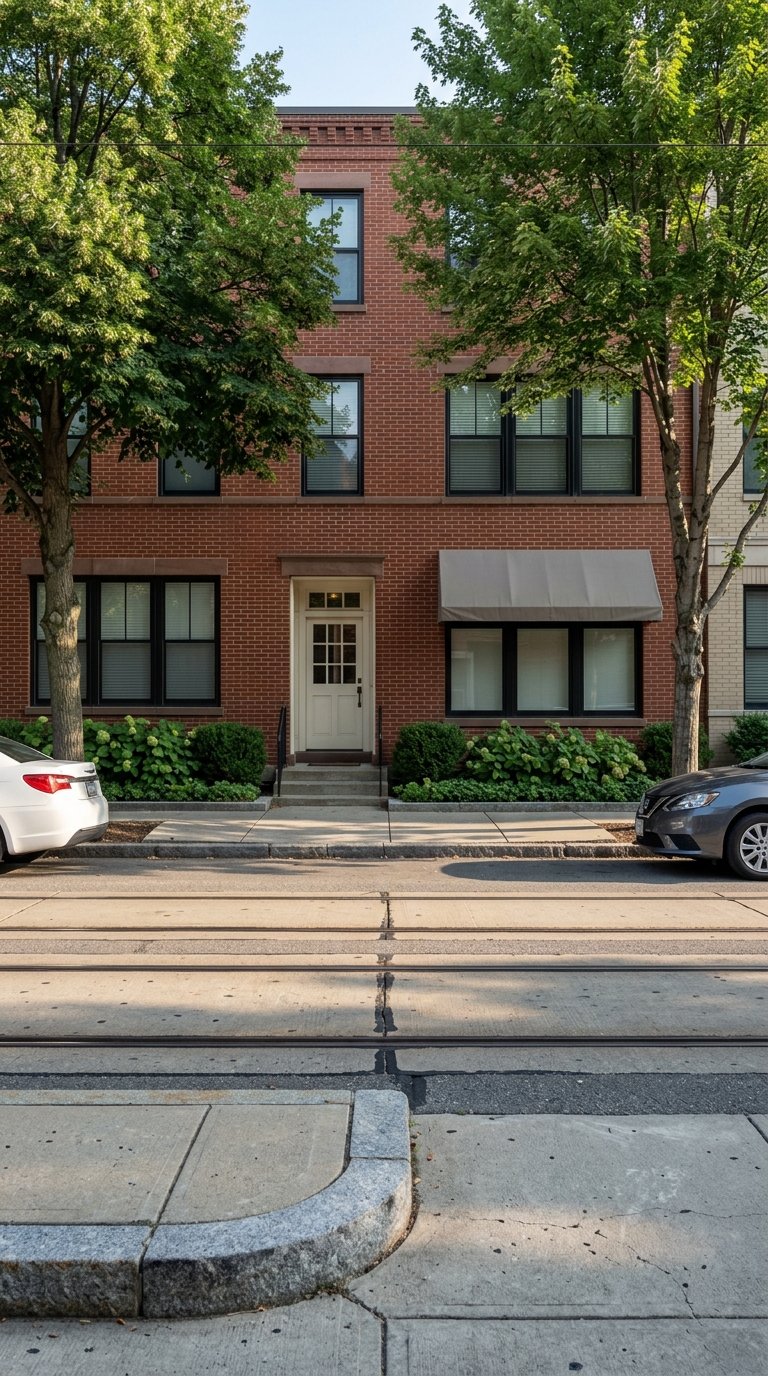
Curious why some Brookline homes seem to trade quietly, without the usual flood of online exposure? In a market where Redfin reported a median sale price of $1.65 million in March 2026, a median 19 days on market, and about two offers per home, it makes sense that some sellers and buyers look for more controlled ways to navigate the process. If you are wondering what a private listing really means, how it works in Massachusetts, and when it may or may not make sense, this guide will walk you through it. Let’s dive in.
What “private listing” usually means in Brookline
In Brookline real estate, private listing is often a consumer-friendly shortcut rather than one single legal category. In practice, it usually refers to one of three listing paths recognized through MLS PIN rules: office exclusive, delayed listing, or coming soon.
These options do not all work the same way. Some are truly limited in exposure, while others are simply staged forms of a public launch. Understanding the difference matters if you are trying to balance privacy, timing, and market reach.
Office exclusive: the most private option
An office exclusive is the clearest example of a true private listing. Under MLS PIN rules, the seller must refuse MLS dissemination on the seller’s own initiative and sign the required Non MLS Listing Form before the filing deadline.
In plain terms, that means the home is not broadly shared through the MLS to other participants. This is usually the best fit when a seller wants discretion, tighter control over access, or fewer people moving through the property.
Delayed listing: a postponed MLS launch
A delayed listing means the seller and broker agree to postpone filing the property to the MLS until a future date. This is not the same as keeping the property permanently private.
Under MLS PIN rules, the property cannot be treated as an office exclusive during that delay. Instead, it is a timed hold before the home later enters the MLS and service compilation.
Coming soon: visible, but not yet showing
A coming soon listing is already filed, but showings are deferred. MLS PIN allows a Coming Soon period of up to 21 days from filing.
During that period, the property is treated as off market, and showings are not allowed by the listing broker or cooperating brokers. Even so, broker advertising may still be allowed under the MLS PIN rule set, which is why this option is more of a pre-launch status than a true private listing.
Why private listings matter in Brookline
Brookline is a premium market, and homes can move quickly. With pricing and pace like the current market data suggest, both sellers and buyers may be looking for an edge, but not always in the same way.
For sellers, a private listing strategy can offer more control. For buyers, it can mean access to opportunities before a broader public rollout. Still, these benefits come with tradeoffs that deserve a careful look.
Why sellers choose a private route
Some sellers value privacy as much as exposure. They may want to limit foot traffic, reduce disruption at home, or be more selective about who sees the property.
That can be especially appealing for homeowners with busy schedules, valuable interiors, or a strong preference for discretion. In Brookline, this tends to be a niche strategy rather than the default approach, since broad exposure is often important for competition and price discovery.
Why buyers pay attention to private listings
For buyers, private listings can create earlier access to scarce inventory. In a market with fast turnover, seeing a home before it is widely available can feel like a meaningful advantage.
That said, buyers should understand that not every “private” opportunity is the same. An office exclusive, a delayed listing, and a coming soon property each offer a different level of access and timing.
How the process works in Massachusetts
The biggest rule to understand is this: the seller must make the choice. A broker cannot simply decide to hide a listing from the MLS without the seller’s direction and the proper paperwork.
That is an important consumer protection point. It helps ensure that the decision to limit exposure is intentional and documented.
Public marketing changes the timeline
Once a property is publicly marketed, the rules become more strict. NAR counts yard signs, flyers, public websites, IDX or VOW displays, email blasts, multi-brokerage listing-sharing networks, and public apps as public marketing.
Once that happens, the listing must be submitted to the MLS within one business day. So if you want a true office-exclusive approach, public promotion is generally not part of that plan.
Massachusetts requires relationship disclosure
In Massachusetts, real estate licensees must provide a written relationship disclosure at the first personal meeting to discuss a specific property. The state recognizes seller agency, buyer agency, facilitator, designated agency, and dual agency.
This matters in any transaction, but it becomes especially important when a listing is handled more discreetly. If you are buying or selling through a private-listing path, you should understand who represents whom from the start.
Dual agency must be disclosed
Because private inventory often involves discretion and close communication, agency questions can feel more sensitive. Massachusetts is clear that undisclosed dual agency is illegal.
If dual agency is involved, informed written consent is required. That makes transparency essential, especially in situations where access to a property may be more limited than usual.
What sellers should weigh before choosing private exposure
A private listing can absolutely be the right fit, but it should be a strategic choice, not an automatic one. The main tradeoff is simple: less exposure usually means a smaller buyer pool.
For some sellers, that is worth it. For others, especially if maximizing competition is the top priority, broader marketing may produce a stronger result.
Privacy versus price discovery
When a home is not widely disseminated, fewer buyers are likely to see it. That can reduce the number of showings and offers, which may also limit the market’s ability to fully test pricing.
On the other hand, if privacy and control matter most, a smaller, more targeted rollout may feel more comfortable. The right answer depends on your goals, timeline, and tolerance for public exposure.
Private does not always mean off market
This is one of the most common points of confusion. A coming soon listing is in the MLS, even though showings are deferred.
A delayed listing is also different from a true off-market strategy, because it is designed to enter the MLS later. If you want the most private option, office exclusive is the clearest shorthand.
What buyers should know about finding private listings
Buyers are often drawn to the idea of off-market or private inventory, especially in Brookline where supply can feel tight. But these opportunities are not usually found the same way as standard MLS listings.
Because office exclusives are not disseminated to other MLS participants, buyers often learn about them through their own agent’s network or through direct broker-to-broker communication. In practice, that means strong local relationships and active buyer representation can matter.
Speed and clarity matter
If you are hoping to buy through a private listing channel, it helps to be ready. That means being clear on your budget, timing, and must-haves before a suitable property surfaces.
It also helps to understand that limited exposure does not always mean a bargain. In Brookline’s market, even discreet opportunities can attract serious interest.
When a private listing makes sense
A private listing is often most sensible when discretion is a top priority. That could include sellers who want to limit traffic, control timing, or manage a more selective launch.
It can also make sense as part of a phased strategy. For example, a seller may begin with a controlled approach and then move to full MLS exposure if broader reach becomes the better next step.
When full market exposure may be better
If your top goal is generating the widest possible buyer demand, a traditional MLS launch may be the stronger path. Broad visibility can support stronger price discovery and create more competition.
That is why the best strategy is rarely one-size-fits-all. The right plan should reflect your priorities, your property, and the realities of the Brookline market at the time you are ready to move.
Choosing between office exclusive, coming soon, delayed listing, and full-market exposure is ultimately about fit. If you are selling, you want a strategy that protects your priorities while giving your home the right presentation. If you are buying, you want clear guidance on where private opportunities may exist and how to pursue them thoughtfully. For tailored advice on Brookline private listings and the broader local market, connect with Eileen Strong O'Boy.
FAQs
What is a private listing in Brookline real estate?
- In Brookline, “private listing” usually refers to one of three limited-exposure paths: office exclusive, delayed listing, or coming soon, though office exclusive is the most private of the three.
Is a private listing legal in Brookline, Massachusetts?
- Yes. A private listing can be legal when it is handled under MLS PIN rules and Massachusetts brokerage requirements, with the seller authorizing the choice and the proper forms completed.
What is the difference between office exclusive and coming soon in Brookline?
- An office exclusive is not disseminated through the MLS to other participants, while a coming soon listing is filed in the MLS but cannot be shown during the allowed pre-launch period.
Can a Brookline seller publicly advertise a private listing?
- If a property is publicly marketed, it must be submitted to the MLS within one business day, so public advertising does not align with a true office-exclusive approach.
How do buyers find private listings in Brookline?
- Buyers often hear about office exclusives through their own agent’s local network or direct broker-to-broker outreach, since those listings are not broadly disseminated through the MLS.
Do Massachusetts agency rules still apply to private listings?
- Yes. A private listing changes exposure, not the need for written relationship disclosure and proper consent where Massachusetts agency rules require it.